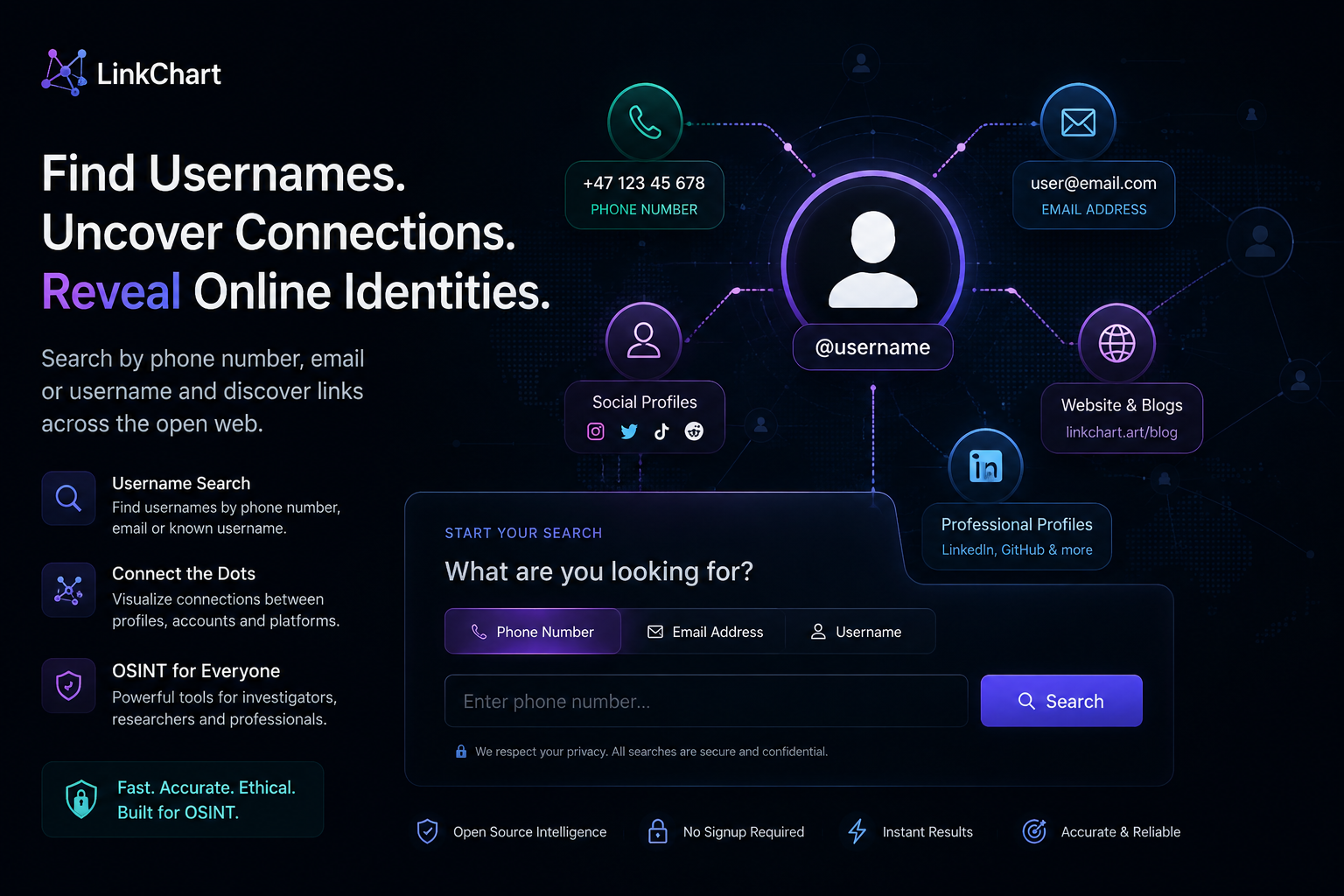
Imagine you're in the thick of a high-stakes investigation, surrounded by a maze of documents and data points. Each piece holds a clue, but without a clear map, the connections remain hidden. This is where the evolution of OSINT tools, like linkchart.art, steps in, transforming scattered information into a coherent narrative. While many focus on the technical capabilities of these tools, the real magic lies in how they turn chaos into clarity. It's not just about gathering data; it's about crafting a story where every link is a step closer to the truth. Let's delve into the nuances of this evolving field and see how it reshapes our understanding of information.
The Transformation of OSINT in the Past Year
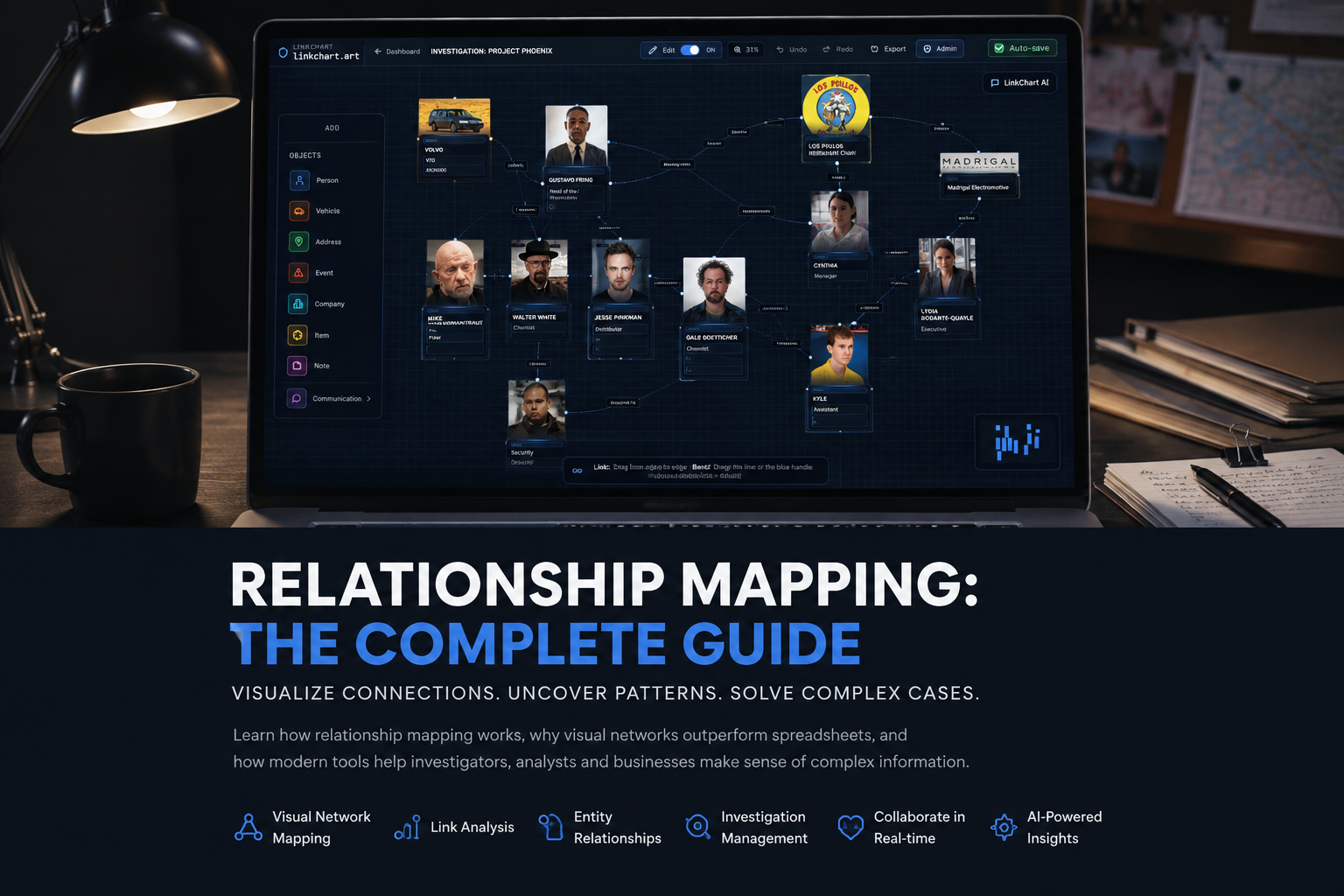
The past year has seen a seismic shift in Open Source Intelligence (OSINT). Traditional methods, once reliant on static spreadsheets and fragmented notes, have given way to digital platforms like linkchart.art. These tools have revolutionized how investigators, journalists, and analysts collect and analyze data. Imagine trying to unravel a complex web of financial transactions. In the past, this might have meant manually combing through piles of bank statements. Now, tools like linkchart.art allow you to visualize these connections in real-time, offering insights that were once out of reach. This evolution not only boosts efficiency but fundamentally changes investigative work.
Consider a scenario where a compliance team is tasked with identifying potential money laundering activities. Previously, they might have relied on disparate reports and manual cross-referencing. With linkchart.art, they can now create a dynamic map of transactions, highlighting suspicious patterns that warrant further investigation. This shift from static to dynamic analysis not only saves time but also enhances the accuracy of their findings.
The Psychological Impact of OSINT Discoveries
Discovering sensitive information through OSINT can have a profound psychological impact. The emotional journey of uncovering hidden truths is often overlooked, yet it shapes how information is processed and acted upon. Take a journalist who uncovers a corporate scandal. The initial thrill of discovery soon gives way to the weight of responsibility and the potential fallout of public exposure. One journalist, using OSINT tools, revealed a network of unethical practices within a corporation. The emotional rollercoaster of excitement, doubt, and resolution highlighted the need for objectivity and ethical standards. Such experiences underscore the importance of emotional resilience in OSINT investigations.
In another case, an investigator working on a missing persons case used OSINT to track digital footprints, leading to a breakthrough. The emotional impact of piecing together the last known movements of a missing individual can be intense, requiring investigators to balance empathy with professional detachment. Regular debriefing sessions and mental health support are crucial in managing the emotional toll of such sensitive investigations.
Leveraging Linkchart.art for Real-Time Investigations
Imagine yourself at a live event, perhaps a bustling conference. Being able to track connections in real-time can be invaluable. With linkchart.art, investigators can map out relationships as they unfold, providing immediate insights into the dynamics at play. During a major industry conference, an investigative team used linkchart.art to monitor interactions between key players. By mapping these connections in real-time, they identified emerging alliances and potential conflicts, allowing them to act swiftly. The benefits of such real-time data mapping are clear: enhanced situational awareness and the ability to make informed decisions on the fly.
Consider the practical application of this during a political rally. Investigators can use linkchart.art to track affiliations and interactions, identifying key influencers and their networks. This real-time capability allows for immediate strategic decisions, such as identifying potential security threats or understanding the influence dynamics within the crowd.
Common Mistakes in OSINT Data Interpretation
Despite advancements in OSINT tools, common mistakes in data interpretation persist. Emotional biases can cloud judgment, leading to incorrect conclusions. It's crucial for investigators to remain objective, especially when dealing with complex datasets. A frequent pitfall is confirmation bias, where investigators focus on data that supports their preconceived notions while ignoring contradictory evidence. To combat this, it's essential to approach each investigation with an open mind and a willingness to challenge assumptions. By doing so, investigators can ensure their conclusions are based on a balanced analysis of the available data.
One practical tip is to use a checklist to ensure objectivity: cross-check findings with multiple sources, seek peer reviews, and regularly question the narrative being constructed. This approach helps in maintaining a balanced perspective and avoiding the trap of selective data interpretation.
Comparative Analysis: Linkchart.art vs Traditional OSINT Methods
Comparing linkchart.art to traditional OSINT methods reveals stark differences in efficiency and clarity. Traditional methods often rely on static documents and unstructured data, which can obscure critical connections. In contrast, linkchart.art offers a dynamic platform that brings these connections to the forefront. In a complex fraud investigation, traditional methods failed to reveal critical links. By switching to linkchart.art, the team visualized the network of transactions and identified key players. This shift expedited the investigation and ensured no stone was left unturned. The clarity offered by linkchart.art makes it invaluable for modern OSINT investigations.
For example, in a case involving cross-border financial fraud, traditional methods struggled to keep up with the volume and complexity of data. Linkchart.art's ability to integrate various data sources into a cohesive visual map allowed investigators to quickly identify the flow of illicit funds and the key entities involved, leading to a successful prosecution.
Delayed Gratification in OSINT Investigations
In the fast-paced world of OSINT, delayed gratification can be a powerful strategy. Waiting for complete data before drawing conclusions can lead to more accurate outcomes. This approach requires patience and discipline, but the benefits are worth the effort. A compliance team faced with a complex regulatory investigation opted for patience, gathering all necessary data before making determinations. This methodical approach allowed them to construct a comprehensive picture, leading to a successful resolution. The lesson here is clear: in OSINT, patience can be as valuable as speed.
Consider the analogy of a chess game, where rushing to capture pieces can lead to a strategic disadvantage. Similarly, in OSINT, waiting for the full picture can reveal insights that are not immediately apparent, ultimately leading to a more successful outcome.
Emotional Outcomes in Sensitive OSINT Investigations
Handling sensitive cases in OSINT can take an emotional toll. The work often involves uncovering distressing information, challenging to process. It's important for investigators to develop strategies for managing stress and maintaining professional detachment. Establishing clear boundaries between work and personal life ensures the emotional weight of the investigation doesn't spill over. Regular debriefing sessions with colleagues provide a supportive environment for processing difficult emotions and maintaining a healthy perspective.
Incorporating mindfulness practices and regular physical exercise can also help investigators manage stress. These strategies promote mental well-being and ensure that investigators remain effective and resilient in their roles.
The Role of Linkchart.art in Collaborative Investigations
Collaboration is key to successful investigations, and linkchart.art facilitates teamwork and shared understanding. By providing a centralized platform for mapping relationships, linkchart.art enables multiple stakeholders to contribute to and refine the investigation process. In a recent multi-agency task force operation, linkchart.art was used to coordinate efforts across teams. The ability to visualize and share information in real-time allowed for seamless collaboration and a unified approach to problem-solving. This underscores the value of linkchart.art in fostering effective teamwork.
Consider the benefits of such collaboration in a scenario involving international law enforcement agencies. Linkchart.art's ability to provide a common visual language and platform ensures that all parties are aligned, reducing the risk of miscommunication and enhancing the overall effectiveness of the investigation.
Future Trends in OSINT and Digital Investigations
The future of OSINT is poised for further evolution. Emerging technologies, like AI and machine learning, promise to revolutionize data collection and analysis. These advancements will likely enhance tools like linkchart.art, offering greater insights and efficiencies. AI could automate routine tasks, freeing investigators to focus on more complex aspects. AI-driven analytics might provide deeper insights into data patterns, uncovering connections that might otherwise go unnoticed. As these technologies develop, the future of OSINT promises to be both exciting and transformative.
Imagine a future where AI not only processes data but also suggests potential investigative paths, allowing human investigators to focus on strategic decision-making. This synergy between human expertise and technological advancement holds the potential to redefine the landscape of digital investigations.
FAQ
How has OSINT changed in the past year?
OSINT has evolved with advanced tools like linkchart.art, allowing for more efficient data mapping. These tools enable investigators to visualize complex relationships, streamlining the investigative process.
What are the new features of linkchart.art?
Linkchart.art now includes an infinite canvas for mapping entities and labelled edges to define relationship types clearly, enhancing clarity and usability for complex cases.
How can linkchart.art improve investigative clarity?
Linkchart.art improves clarity by providing a visual structure where every relationship is labelled, reducing ambiguity and ensuring connections are easily understood.
What are common pitfalls in OSINT data interpretation?
Common pitfalls include allowing emotional biases to influence conclusions and misinterpreting unlabelled data. It's crucial to maintain objectivity and use tools like linkchart.art that provide clear, labelled data relationships.
How does linkchart.art compare to other OSINT tools?
Linkchart.art stands out by offering labelled relationship mapping, which is more precise than generic diagram tools, making it a preferred choice for detailed OSINT work.
Reflecting on the evolution of OSINT tools, it's clear that digital investigations have become more nuanced and interconnected. The ability to map relationships in real-time and maintain clarity amidst complexity has transformed how investigators approach their cases. This shift has enhanced investigative confidence and fostered a shared understanding among teams. Consider a journalist uncovering a corporate scandal, where connections were initially obscured. The revelation of these hidden links, facilitated by modern tools, was not just an investigative breakthrough but a moment of clarity that reshaped the narrative. In this landscape, some teams have found that using a labelled link chart can keep cases readable and revisable. One approach that embodies this idea is the use of linkchart, which offers a framework where every relationship is defined, enhancing both clarity and precision in briefings. As more investigation teams embrace these tools, the potential for deeper insights and more efficient resolutions continues to grow.